
How to Prepare for a Medical Viva Exam: Structures, Questions and a 4-Week Plan
How to prepare for a medical viva: answer structures, example questions by subject, a 4-week plan, a self-scoring rubric and safe AI practice.
Contents (14 sections)
To prepare for a medical viva, you need two things: answer structures you can say out loud without notes, and plenty of practice answering follow-up questions under mild pressure. Formats differ a lot, from UK finals and postgraduate vivas to the MBBS professional exams common in India and Pakistan, but the skills are the same. This guide gives you a structure for every question type, example viva questions by subject with outline answers, a four-week plan, a self-scoring rubric and a safe way to practise with an AI examiner.
Key points
- Every answer has four rungs: opening sentence, structure, clinical link, then stop for the follow-up.
- Use a fixed structure for each question type: concept, disease, drug, comparison, "what happens if", image.
- Practise out loud with randomly drawn questions and at least one follow-up per answer.
- Score your recordings on five criteria and fix the weakest one each week.
What a medical viva actually tests
A viva (viva voce, "by the living voice") is an oral exam in which an examiner asks you a question and follows your answer with deeper or sideways questions. You may get one broad topic, several short questions, an image, a specimen, some data to interpret or a short clinical scenario. What every format shares is the follow-up: the examiner goes deeper where you are solid and probes where your understanding starts to break.
The medical education literature is candid about oral exams: they explore reasoning well, but results depend on the examiner and on the questions drawn, which is why structure and standardisation matter (Memon, Joughin and Memon, 2010). Guidance written for examiners asks them to use structured, standardised questions and to be trained in running the viva fairly (Moleyar, 2018). A 2023 systematic review of 24 studies found that structured vivas, where examiners use pre-set questions and marking guides, reached reliability coefficients of 0.75-0.80, against about 0.50 for traditional unstructured vivas, and most learners found them acceptable (Abuzied and Nabag, 2023). For you, that means two things: prepare for several question styles, not a single script, and expect marks to follow recognisable criteria such as structure, accuracy and safe reasoning.
Common viva formats and what to prepare
| Format | What happens | How to prepare |
|---|---|---|
| Table or theory viva | An examiner picks topics from the syllabus and follows up | A list of 20-30 classic questions per subject, answered out loud |
| Specimen, slide or spotter viva | You identify a specimen, histology slide, bone or image, then discuss it | Describe what you see before naming it; rehearse with labelled images from your practicals |
| Instrument or drug viva | You are shown an instrument, a drug or a prescription | Name, use, mechanism, one complication or adverse effect |
| Practical or record-book viva | Questions start from the practicals or record book you submitted | Reread your own practical work: examiners often open with it |
| Clinical case viva | A short scenario or a patient you clerked, then management questions | History, examination, differentials, investigations, management; safety first |
Answer structures for every question type
The fastest way to sound organised is to have the skeleton ready before you start talking. Think of every answer as a ladder you climb in the same order each time:
The middle rung changes with the question type. Keep one skeleton per type:
| Question type | Structure | Example prompt |
|---|---|---|
| "Tell me about..." (concept) | Definition - mechanism or structure - key points - clinical link | "Tell me about the Frank-Starling mechanism" |
| Disease | Definition - aetiology - pathogenesis - presentation - investigations - management | "Tell me about iron deficiency anaemia" |
| Drug or class | Class - mechanism - pharmacokinetics - indications - adverse effects - contraindications - interactions | "Tell me about ACE inhibitors" |
| Comparison | Shared criterion - similarities - differences - practical consequence | "ACE inhibitors versus ARBs" |
| "What happens if..." | Variable that changes - chain of effects - compensation | "What happens after acute blood loss?" |
| Image or specimen | What you see - interpretation - what you would check - conclusion | An anatomy image or a histology slide |
A worked example: "Tell me about ACE inhibitors"
Textbook-level content only; always check against your own course material.
- Opening: "ACE inhibitors are antihypertensives that block angiotensin-converting enzyme, for example ramipril and enalapril. Their mechanism explains both their uses and their side effects."
- Mechanism: less angiotensin II and aldosterone, so vasodilation and less sodium retention; bradykinin breakdown is also reduced.
- Indications: hypertension, heart failure, after myocardial infarction, and some forms of chronic kidney disease.
- Adverse effects, linked to mechanism: dry cough (bradykinin), hyperkalaemia (less aldosterone), angioedema, first-dose hypotension, and a fall in kidney function in bilateral renal artery stenosis.
- Contraindications: pregnancy, history of angioedema.
- Clinical link, then stop: "So after starting one, I would check potassium and renal function." Then wait. The likely follow-up: "Why might you switch to an ARB?" Because ARBs block the AT1 receptor without the bradykinin effect, so cough is less common.
Example viva questions by subject, with outline answers
These are classic questions across schools. The outlines are the skeleton to say out loud, not complete answers: fill them from your own lectures, and expect your examiner to go deeper on whatever you mention.
Pharmacology
| Question | Outline answer |
|---|---|
| Tell me about beta-blockers | β1-selective (bisoprolol, atenolol) vs non-selective (propranolol) - lower heart rate, contractility and renin release - uses: angina, after MI, rate control in AF, selected agents in heart failure - adverse: bradycardia, fatigue, bronchospasm (non-selective), may mask hypoglycaemia - caution in asthma and heart block |
| How does warfarin work and how is it monitored? | Inhibits vitamin K epoxide reductase - less functional factors II, VII, IX, X (and proteins C and S) - monitored with the INR - many interactions via CYP2C9 and diet - reversal: vitamin K, prothrombin complex concentrate - teratogenic |
| Compare loop and thiazide diuretics | Site: thick ascending limb (NKCC2) vs distal convoluted tubule (NCC) - loop more potent - both cause hypokalaemia - calcium: loops increase urinary loss, thiazides reduce it (hypercalcaemia) - uses: oedema and acute heart failure vs hypertension |
| Explain paracetamol toxicity | Normally conjugated - in overdose, more is oxidised to NAPQI - glutathione is depleted - hepatocellular necrosis - antidote: acetylcysteine, which replenishes glutathione; timing matters |
Physiology
| Question | Outline answer |
|---|---|
| Explain the Frank-Starling mechanism | Definition: stroke volume rises with end-diastolic volume - mechanism: stretch optimises myofilament overlap and calcium sensitivity - matches the output of the two ventricles - clinical link: flattened curve in heart failure |
| What happens after acute blood loss? | Less venous return - lower preload and stroke volume - lower cardiac output and pressure - baroreceptor reflex: more sympathetic activity, tachycardia, vasoconstriction - slower: RAAS and ADH retain salt and water |
| Describe the oxygen-haemoglobin dissociation curve | Sigmoid shape from cooperative binding - right shift (lower affinity, more unloading): higher CO2, H+, temperature and 2,3-BPG - left shift: the opposite, fetal haemoglobin, carbon monoxide - clinical link: unloading in exercising muscle |
| Describe the ventricular action potential | Phase 0: fast Na+ influx - phase 1: early repolarisation (K+ out) - phase 2: plateau, L-type Ca2+ in balances K+ out - phase 3: repolarisation, K+ out - phase 4: resting potential - link: long refractory period prevents tetany |
Pathology
| Question | Outline answer |
|---|---|
| Describe acute inflammation | Definition and triggers - vascular changes: vasodilation, increased permeability, exudate - cellular events: margination, rolling, adhesion, transmigration, chemotaxis, phagocytosis - mediators (histamine, prostaglandins, cytokines) - outcomes: resolution, abscess, chronic inflammation, fibrosis |
| Necrosis versus apoptosis | Necrosis: pathological, cell swelling, membrane rupture, inflammation - apoptosis: programmed, cell shrinkage, apoptotic bodies, no inflammation - pathways: intrinsic (mitochondrial) and extrinsic (death receptor) - examples of each |
| What is Virchow's triad? | Stasis of blood flow, endothelial injury, hypercoagulability - one clinical example for each (immobility, surgery or vascular damage, inherited or acquired thrombophilia) - link: deep vein thrombosis prophylaxis |
| Benign versus malignant tumours | Differentiation, growth rate, local invasion, metastasis - naming conventions (-oma, carcinoma, sarcoma) - examples - link: why invasion and metastasis define malignancy |
Anatomy
| Question | Outline answer |
|---|---|
| Describe the brachial plexus | Roots C5-T1 - three trunks - six divisions - three cords named by their relation to the axillary artery - five terminal branches (musculocutaneous, axillary, radial, median, ulnar) - link: upper root (C5-C6) versus lower root (C8-T1) injuries |
| Describe the inguinal canal | Location and direction - deep and superficial rings - walls - contents: spermatic cord or round ligament, ilioinguinal nerve - link: indirect hernias pass lateral to the inferior epigastric vessels, direct hernias medial |
| Describe the blood supply of the heart | Right coronary artery and left main (anterior descending and circumflex) - territories - dominance defined by the artery giving the posterior descending branch - link: infarct territory from ECG leads |
| What is the rotator cuff? | Supraspinatus, infraspinatus, teres minor, subscapularis - actions - nerve supply: suprascapular, axillary, subscapular nerves - link: supraspinatus most often involved in tears and impingement |
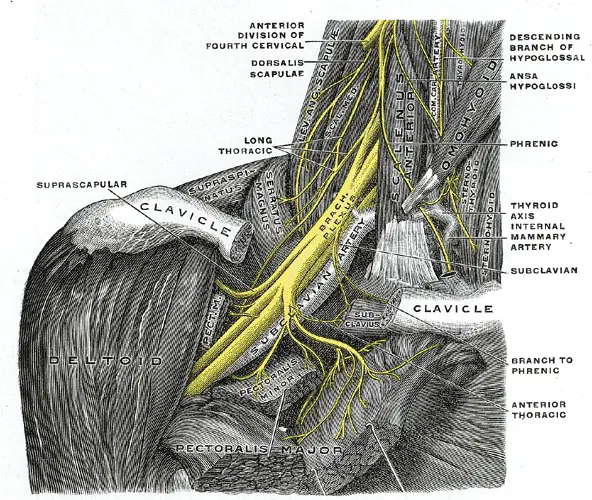

Want more by subject? Use the same format to write your own list from past candidates' questions and your syllabus. Aim for 20-30 questions per subject, not 200: depth on the classics beats a skim of everything.
More outline answers: biochemistry and microbiology
Textbook-level outlines for two more subjects that often have their own viva. As above, fill them from your own lectures and check every detail against your course material.
| Question | Outline answer |
|---|---|
| How is glycolysis regulated? | Three irreversible steps: hexokinase (glucokinase in liver), phosphofructokinase-1, pyruvate kinase - PFK-1 is the main control point: activated by AMP and fructose-2,6-bisphosphate, inhibited by ATP and citrate - hormonal control in the liver: insulin favours glycolysis, glucagon opposes it via fructose-2,6-bisphosphate - link: pyruvate kinase deficiency causes haemolytic anaemia |
| Describe the urea cycle | Location: liver, first steps in mitochondria (carbamoyl phosphate synthetase I, ornithine transcarbamylase), rest in cytosol - converts toxic ammonia to urea for renal excretion - N-acetylglutamate activates CPS I - link: hyperammonaemia in urea cycle defects (OTC deficiency, X-linked, is the most common) and in liver failure |
| Gram-positive versus Gram-negative bacteria | Gram-positive: thick peptidoglycan with teichoic acids, retains crystal violet (purple) - Gram-negative: thin peptidoglycan plus an outer membrane with lipopolysaccharide, pink after the counterstain - lipid A of LPS is the endotoxin - link: the outer membrane keeps some drugs out (vancomycin), and endotoxin drives Gram-negative septic shock |
| How do bacteria become resistant to antibiotics? | Mechanisms: enzymatic inactivation (beta-lactamases), altered target (PBP2a in MRSA), reduced entry or efflux pumps - acquisition: mutation, or horizontal gene transfer by conjugation, transformation, transduction - link: stewardship, and why cultures are taken before starting antibiotics where possible |
The 20-minute practice loop
- Draw a question at random from your list, not the one you know best.
- Answer out loud for two to four minutes without notes, following the ladder. Record it on your phone.
- Take one follow-up: a why, a what-if, a comparison or a short case.
- Check against your notes and write one corrective sentence per error.
- Retry with a parallel question, not the same one.
This is retrieval practice applied to speech. Recalling information strengthens memory more than rereading it (Karpicke and Roediger, 2008), and a randomised trial in medical students found better long-term retention with repeated testing than with repeated study (Larsen, Butler and Roediger, 2009). The viva adds a skill you only build by doing it: organising an answer while speaking.
A four-week viva preparation plan
| Week | Focus | Daily practice |
|---|---|---|
| 1 | List likely questions from the syllabus, lectures and past candidates; write the structures | Two questions out loud, notes allowed |
| 2 | Close gaps; build comparison pairs | Three random questions, no notes, one follow-up each |
| 3 | Mix subjects; add images, data and short cases | Timed loop plus one mock with a peer or AI examiner; score it with the rubric |
| 4 | Full mocks and weak-list review; no new topics in the last days | Mock every other day; light review and sleep before the exam |
If you only have a week, compress it: list questions on day one, then do random-question loops every day and at least two full mocks. If your viva is further away, spread the question list over a spaced repetition schedule so each classic question comes back several times, and use the exam readiness check a week out to see which subjects still need work.
How to practise a viva with AI
An AI examiner is useful because it is available at 11 pm, never tires of asking follow-ups and can draw questions from your own lecture material. It is also fallible. Set it up so its strengths help and its weaknesses stay visible:
- Bind it to your sources: upload your lecture slides or notes and ask for questions only from them. Generic questions drift away from your syllabus.
- Give it an examiner brief: level (year of study), style (supportive or strict), one question at a time, wait for your answer.
- Answer by voice, not text: typing lets you edit; a viva does not.
- Ask for specific feedback: structure, missing key points, accuracy, and one better opening sentence.
- Verify every correction against your notes or textbook before you learn it.
Score yourself: a five-criterion rubric
Listening back to a recording without criteria is frustrating: you feel it was weak but not why. Score each recorded answer from 0 to 2 per criterion. The total out of 10 is not an exam mark; it shows what improves week to week. You can fill it in right here: pick one level per criterion and the rubric tells you what to work on.
Each week, pick the lowest criterion and work only on that one.
The follow-ups examiners use, and how to handle them
The follow-up is where a viva is won or lost, and most follow-ups belong to a handful of types. Using the ACE inhibitor answer above as the starting point:
| Follow-up type | Example after the ACE inhibitor answer | How to handle it |
|---|---|---|
| "Why?" | "Why do they cause a dry cough?" | Go one level down the mechanism: less bradykinin breakdown. One sentence, then stop |
| "What if...?" | "What happens if the patient has bilateral renal artery stenosis?" | Name the variable that changes, follow the chain (efferent arteriole, GFR), give the consequence |
| Compare | "How do ARBs differ?" | Shared criterion first (both act on the RAAS), then the one difference that matters (no bradykinin effect) |
| Prioritise | "Which blood test would you check first after starting one?" | Commit to one answer with a reason: potassium and renal function, because of the mechanism |
| Confirm or investigate | "How would you know the cough is the drug?" | Say what you would check or change and what result would confirm it |
| Challenge ("Are you sure?") | "Are you sure they are safe in pregnancy?" | Re-run your reasoning briefly. If you spot an error, correct it calmly ("No, they are contraindicated"); if not, keep your answer politely |
Practise each type on purpose: after every loop answer, ask yourself (or a study partner) one follow-up of a type you have not used yet that day. If you prefer a partner who never runs out of follow-ups, practise follow-ups by voice on your own slides, and check its corrections against your notes.
These follow-ups are not specific to medicine: the general oral exam guide breaks down the types of follow-up questions examiners ask after your first answer in any subject, and what each one is checking.
On the day: steering, silence and safety first
Examiners often build the next question from your last answer. That gives you some control: finish an answer on a point you know well (a mechanism, a classification, a clinical link) and the follow-up often goes there. Do not dodge the question to do it; just end on solid ground.
- If the examiner interrupts, stop. They are usually redirecting you towards what they want to hear, not failing you. Answer the new question.
- Start from what you know: definition, classification or general principle, then move towards the detail.
- Reason out loud: "I don't remember the exact value, but from the mechanism I would expect..." shows reasoning and beats silence.
- Ask for clarification if the question is ambiguous.
- Do not invent: a confident error is usually worse than "I'm not sure".
- Do not argue: if you think the examiner is wrong, say once, politely, what your source says ("In our lectures it was taught as...") and move on.
- Look and sound ready: dress as you would for a clinical placement, greet the examiners and speak loudly enough that nobody asks you to repeat. Nerves are normal; a slow first sentence buys you time.
- Safety first in clinical questions: if a scenario sounds unstable, say what you would do first (for example, assess airway, breathing and circulation) before discussing details.
How to do this with Memoniq
Memoniq includes voice-based oral exam practice in English or Italian on the Student plan; new accounts get Student features for their first 14 days, no card needed, and then stay on the Free plan. You upload your own lecture slides, notes or recordings to a notebook; the simulator asks questions on those topics, listens to your spoken answer and follows up with progressively harder questions. The same notebook generates summaries, written-exam quizzes and flashcards with Anki export for the memorisation side.
It is practice, not an examiner: speech recognition can mishear technical terms and the AI can make mistakes. Check its corrections against your course material. Preparing for an oral exam outside medicine? The general guide on how to prepare for an oral exam from your own notes covers the same loop for any subject.
Limits
Viva formats differ widely between schools and countries, so adapt the structures to yours and check your own regulations. The clinical examples are simplified for study purposes and are not medical advice. No preparation removes the variability of an oral exam, and this guide does not promise a result.
Sources
- Abuzied AIH, Nabag WOM (2023), Structured viva validity, reliability, and acceptability as an assessment tool in health professions education: a systematic review and meta-analysis, BMC Medical Education
- Geeky Medics - Medical viva exam preparation
- Moleyar VS (2018), How to conduct medical viva, Medical Journal of Dr. D.Y. Patil Vidyapeeth 11(4)
- Memon MA, Joughin GR, Memon B (2010), Oral assessment and postgraduate medical examinations: establishing conditions for validity, reliability and fairness, Advances in Health Sciences Education 15(2):277-289
- General Medical Council - MLA content map (Medical Licensing Assessment)
- Medical Schools Council - Medical Licensing Assessment (AKT and CPSA)
- Karpicke & Roediger (2008), The critical importance of retrieval for learning, Science
- Larsen, Butler & Roediger (2009), Repeated testing improves long-term retention relative to repeated study: a randomised controlled trial, Medical Education
- Herman LL et al., Angiotensin-Converting Enzyme Inhibitors (ACEI), StatPearls - NCBI Bookshelf
Frequently asked questions
What is a viva in medical school?
An oral exam in which an examiner asks questions and follows up on your answers, testing knowledge, reasoning and how clearly you communicate. Formats vary by country, school and subject.
What questions are asked in a medical viva?
Classic topics per subject: drug classes and mechanisms in pharmacology, cardiovascular and respiratory mechanisms in physiology, inflammation and cell death in pathology, plexuses, canals and blood supply in anatomy. Expect follow-ups that go deeper or compare.
How do I prepare for a viva exam?
List likely questions, write an answer structure for each question type, then practise out loud with randomly drawn questions and follow-ups. Add full mock vivas and self-scoring in the final weeks.
How long is a medical viva?
It varies: from a few minutes per examiner in some professional exams to longer structured sessions in postgraduate exams. Check your school's regulations and ask recent candidates.
What is the difference between a viva and an OSCE?
An OSCE station usually assesses a practical or communication skill with a standardised patient and a checklist. A viva is a conversation with an examiner about knowledge and reasoning. Some schools blend both.
Can AI simulate a medical viva?
It can ask questions and follow-ups on your own material at any time, which makes it useful practice. It can also mishear terms and make factual mistakes, so verify its corrections.
What should I do if I don't know the answer in a viva?
Start from what you do know, reason out loud from principles and ask for clarification if needed. Avoid inventing facts.
Can I steer a viva towards topics I know?
Partly. Examiners often build the next question from your last answer, so finish on a point you know well, such as a mechanism or a clinical link. Never dodge the question they actually asked.
What follow-up questions do viva examiners ask?
Most follow-ups are one of six types: why (one level deeper in the mechanism), what if (a variable changes), compare, prioritise (what first), confirm or investigate, and a challenge such as 'Are you sure?'. Practise one of each type after your answers.
Are structured vivas fairer than traditional ones?
The evidence suggests they are more reliable: a 2023 systematic review found reliability coefficients of 0.75-0.80 for structured vivas against about 0.50 for traditional ones. Your school decides which format you face.
Keep reading
How to Prepare for an Oral Exam: A Step-by-Step Plan
Find out the format, turn the syllabus into questions, learn one spoken answer structure and practise out loud with follow-ups, including what to do when you do not know.
How to Study for In-House Exams in Medical School
In-house exams are written from your lectures. A per-lecture workflow, an AnKing decision tree, a sample lecture-day schedule and how pass/fail changes the balance.
How to Make Anki Cards From Lecture Slides with AI (Without a Bloated Deck)
AI drafts, you prune: a worked example on one slide, a neutral guide to tool types, CSV vs .apkg, image occlusion, cards per lecture and how to combine with AnKing.
Roberto Coscia
Nursing graduate (BSc) · Founder of Memoniq
Sources are cited and checked at the end of the article. Medical content is educational: always verify against your course material. About the author · Editorial policy
Last updated: September 25, 2026