
How to Study for In-House Exams in Medical School
A lecture-first method for faculty-written med school exams: turn lectures into questions, decide when to use AnKing, space review, practise the format.
Contents (17 sections)
To study for in-house exams in medical school, study from your lectures: your own faculty write these exams from their slides and learning objectives, so turn each lecture into questions within a day or two, review them on a spaced schedule and practise the exam format in the last weeks. Board resources such as AnKing and question banks help with shared core topics, but they do not know what your lecturer chose to stress. This guide gives the per-lecture workflow, a decision tree for when to use AnKing, a sample lecture-day schedule and how the strategy changes if your preclinical years are pass/fail.
Key points
- Your lecture slides and learning objectives are the blueprint: in-house exams are written from them.
- Convert every lecture into recall and application questions within a day or two, not the week before the exam.
- Use AnKing and question banks for shared core topics and format practice; add your own cards for what the lecturer stressed.
What makes in-house exams different
A quick glossary first. In-house (or faculty-written) exams are set by your own school. Many schools group them as block or module exams at the end of each organ system or course. They are different from NBME-written exams, such as the Comprehensive Basic Science Exam (CBSE) or the clinical "shelf" subject exams that some schools use in clerkships, which follow a national content outline.
| In-house exams | Standardised exams (e.g. NBME-style) | |
|---|---|---|
| Who writes the questions | Your course faculty | National item writers to a published blueprint |
| Content source | Lectures, slides, labs, assigned reading | A national content outline |
| Question style | Varies: recall, short answer, clinical vignettes, practicals, orals | Mostly vignette-based single-best-answer items |
| Most useful resources | Your lecture material, learning objectives, released practice questions | Question banks and resources mapped to the blueprint |
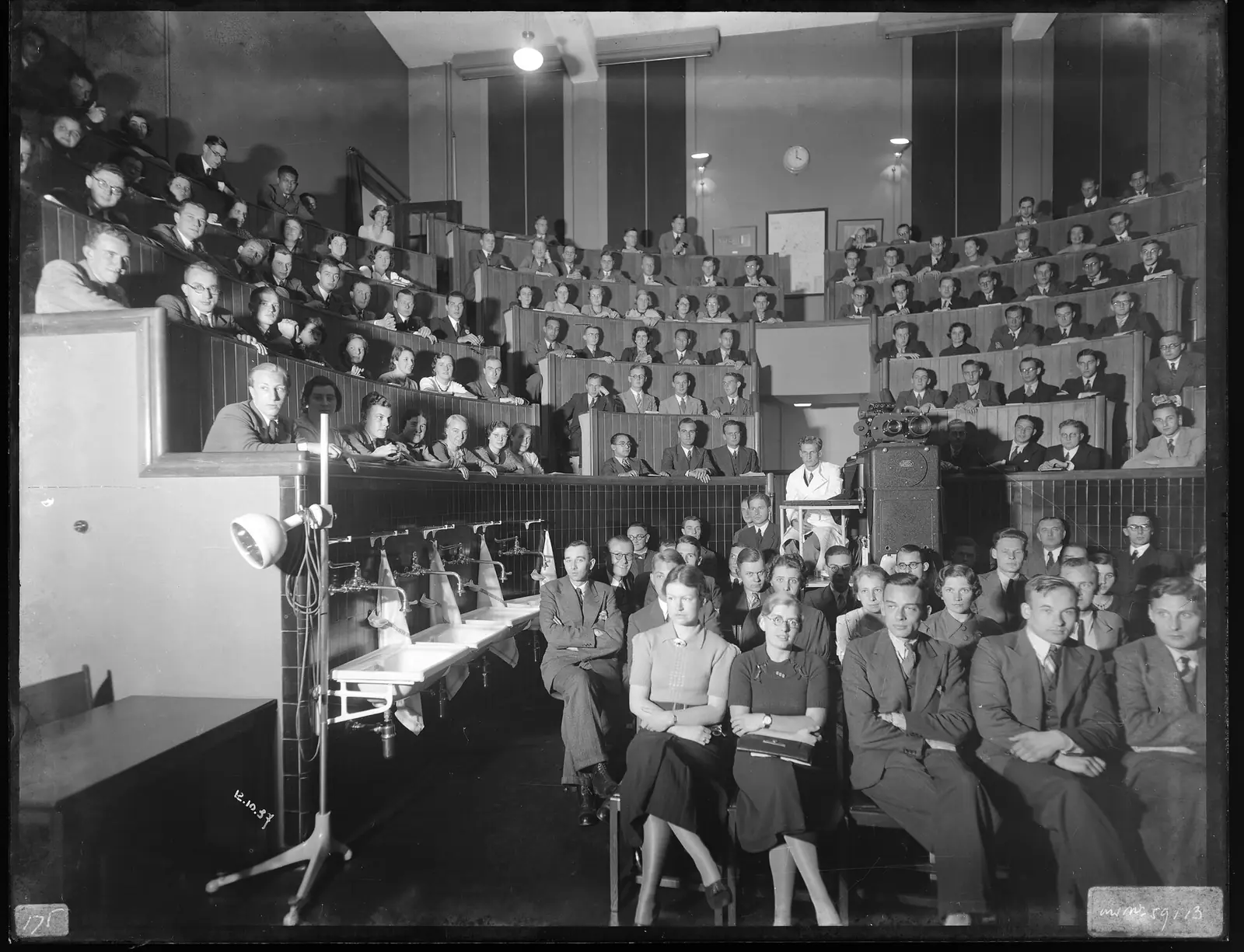
The person writing the questions often taught the lecture, knows which slide they spent ten minutes on and may test a detail that never appears in a board review book. Formats vary: some courses use only multiple choice, others mix short answers, spotter or practical exams and oral components. Outside the US the term is used less, but the situation is the same wherever your own school sets the written papers, practicals and vivas.
How to find out what your exam will look like
Before choosing a method, spend twenty minutes collecting what your school already tells you. Most students skip this and then prepare for the wrong format.
- Module handbook or assessment guide: number of questions, question types, weighting, pass mark, whether there is a practical or oral part.
- Learning objectives: the closest thing to a blueprint. Keep them next to each lecture.
- Formative quizzes and weekly self-assessments: treat them as real exams. They show the style your faculty writes in and where your gaps are.
- Released practice or past questions: use them late, timed, as a format check. Follow your school's rules on sharing exam material.
- The course lead and students in the year above: ask what the exam looks like and which lectures carry weight, not for leaked questions.
A lecture-based workflow that fits a busy timetable
The core idea: a small amount of active work on each lecture while it is fresh, then keep revisiting it. Leaving everything to the exam block turns a 40-lecture module into rereading, the least effective way to use those hours.
- Before the lecture (optional, 5-10 minutes): skim the slides and the learning objectives so you know what to listen for.
- Same day or next day: mark what the lecturer emphasised, then turn the lecture into questions. One question per learning objective is a good minimum.
- Within two days: move discrete facts (values, classifications, drug names) into flashcards; keep "explain" questions in a separate list.
- Weekly: one mixed session of questions across all lectures so far, answering before you look.
- Exam block: timed, mixed practice in the format of the exam, plus released practice questions if your school provides them.
A sample lecture-day schedule
Example A day with five one-hour lectures. Adapt the times to your timetable; the order is what matters: review due cards before adding new ones, and process today's lectures on the same day.
| Time | What | Why |
|---|---|---|
| 07:30-07:50 | Skim today's slides and objectives | You listen for what matters |
| 08:00-13:00 | Lectures; star what the lecturer stresses | The one input no resource gives you |
| 13:00-14:00 | Lunch, a real break | Attention is limited |
| 14:00-15:00 | Due flashcard reviews | Reviews first, so the backlog never grows |
| 15:00-17:00 | Today's lectures into questions and cards (about 20-25 minutes each) | Processing while the lecture is fresh |
| 17:00-17:30 | Break or exercise | Recovery |
| 17:30-18:15 | Mixed questions from earlier lectures, answered before looking | Retrieval and interleaving across topics |
| Evening | Off; protect sleep | Tomorrow's lectures need a rested brain |
How to turn a lecture into questions
Learning objectives are the closest thing to a published blueprint for an in-house exam. Rewrite each objective as a question you could be asked, then add one question that tests application. The NBME item-writing guide, written for faculty who write exam questions, recommends items that test the application of knowledge, often through a short clinical vignette, rather than isolated recall. Many faculty-written exams borrow that style, so practise both.
| Learning objective | Recall question | Application question |
|---|---|---|
| Describe the determinants of stroke volume | Which three factors determine stroke volume? | A patient's afterload rises acutely. What happens to stroke volume if contractility is unchanged, and why? |
| Explain the mechanism of ACE inhibitors | Which conversion do ACE inhibitors block? | A patient on an ACE inhibitor develops a dry cough. What is the likely mechanism and what alternative class avoids it? |
Write the source next to each question, for example "Lecture 12, slides 8-14". When a question looks wrong or a flashcard seems off, you check it in seconds instead of rereading the whole deck. If you draft cards with AI, the guide on how to make Anki cards from lecture slides shows how to prune the draft, and the free slides to Anki converter turns "term - definition" lines into an importable file.
Should you use AnKing for in-house exams? A decision tree
AnKing is a large community Anki deck mapped to US board exams. Board review books with end-of-chapter questions play a similar role for shared core topics. Many students keep it suspended and unsuspend only the cards that match each lecture, then write their own cards for the gaps. The three questions below decide, topic by topic, where your time goes.
When AnKing and your lecturer disagree (a classification, a first-line drug, a cut-off), your lecturer's version is the one that scores on the in-house exam. Note the difference on the card so you are not surprised on boards later.
When a question bank helps, and when it doesn't
| Situation | Question bank? | Better use of time |
|---|---|---|
| Shared core topic taught like boards (e.g. acid-base) | Yes, for vignette practice | Q-bank block after your lecture questions |
| Lecturer's own classification or research topic | No | Your lecture questions and cards |
| Exam is vignette single-best-answer | Yes, for format | Timed mixed blocks in the last two weeks |
| Exam is short-answer, practical or oral | Limited | Written answers under time, labelled images, explaining aloud |
Pass/fail vs graded preclinical years
Many schools now grade preclinical courses pass/fail, and USMLE Step 1 has been reported as pass/fail since 2022. The workflow stays the same; the balance shifts:
- Pass/fail: aim for a secure pass on every block, not for every lecturer's footnote. Spend a larger share of time on core topics that also transfer to boards, and keep lecture-specific cards to what was clearly stressed.
- Graded, or with honours or class rank: lecturer-specific detail is worth points. Your own lecture cards and the lecturer's released questions deserve more of the week.
Either way, check your school's own grading policy: it is the one that applies to you.
Why retrieval and spacing beat rereading
In a study published in Science, Karpicke and Roediger found that repeatedly recalling information produced much better long-term retention than repeatedly studying it. A randomised trial with medical students by Larsen, Butler and Roediger found a similar advantage for repeated testing over repeated study. A review by Cepeda and colleagues found that spacing study sessions over time improves long-term recall compared with massing them. Dunlosky and colleagues rated practice testing and distributed practice highly, and rereading and highlighting low. Among medical students, Deng and colleagues (2015) found that unique Anki cards seen and practice questions completed were both associated with Step 1 scores, an association rather than proof of cause.
None of this guarantees a result for your course. It does explain why ten questions per lecture, revisited several times, tend to be a better use of the same hours than a final reread. To place those revisits around a fixed exam date, see the spaced repetition schedule for exams.
Adapting practice to the exam format
- Single-best-answer questions: read the vignette, predict the answer before looking at the options, then explain why each wrong option is wrong.
- Short-answer questions: write answers under a time limit with a fixed structure such as definition, mechanism, consequence.
- Practical or spotter exams: use labelled images from your lab sessions and cover the labels one structure at a time.
- Oral components: answer out loud without notes and ask someone, or a tool, to follow up with "why?". The guide on how to prepare for a medical viva has answer structures.
A six-week block, week by week
Example Many preclinical blocks run four to eight weeks with the exam at the end. Here is the lecture-first workflow laid over a six-week block; stretch or compress the middle weeks to match yours.
| Week | Lectures | Daily | Weekly |
|---|---|---|---|
| 1 | New lectures | Process each lecture the same day: questions, then cards for discrete facts | Read the assessment guide; start the coverage tracker (below) |
| 2-3 | New lectures | Due reviews first, then today's lectures | One mixed session across all lectures so far |
| 4 | Last lectures | As above; start one timed question block every other day | Mark weak lectures from your wrong answers |
| 5 | Few or none | Timed mixed practice in the exam format; weak lectures first | Released practice questions, if your school has them |
| 6 (exam week) | None | Short mixed sets, due reviews, sleep | No new material in the last two days |
The point of the table is that weeks 5 and 6 are for practice, not first-time learning. That only works if weeks 1 to 4 kept up with the lectures. If you want dated reviews rather than a weekly rhythm, generate dated reviews for the block from the number of lectures and the exam date.
The last two weeks before the exam
- Map coverage: list every lecture and mark whether you have questions, flashcards and at least one mixed review for it.
- Prioritise weak lectures: use your wrong answers, not your feelings, to decide what to review.
- Practise the format: timed multiple choice, written short answers or out-loud explanations.
- Protect sleep: late-night cramming trades tomorrow's recall for tonight's feeling of progress.
If you want a rough check of whether the remaining lectures fit the days you have, the exam study plan calculator does the arithmetic.
Checklist for each lecture
- Lecturer's emphasis marked on the slides.
- At least one question per learning objective, with the source slide.
- One application question for each major mechanism.
- AnKing cards for the topic unsuspended, or your own cards written, per the decision tree.
- Lecture included in the next weekly mixed review.
A lecture coverage tracker you can copy
"Map coverage" is easier when the map already exists. Keep one row per lecture in a spreadsheet and update it as you go; in the exam block, sort by the last column.
| Lecture | Objectives | Questions written | Cards (own / AnKing unsuspended) | Last mixed review | Score on last review |
|---|---|---|---|---|---|
| [L12 Cardiac output] | [4] | [6] | [8 / 22] | [date] | [5/6] |
| [L13 ...] | |||||
| [L14 ...] |
Two warning signs to look for: a lecture with objectives but zero questions (never processed), and a lecture whose last score is low and whose last review is old. Those rows go first in the exam block. For a quick outside view of your whole preparation, try a two-minute readiness check.
How Memoniq helps
Memoniq is built around this lecture-first workflow. Upload the slides, PDFs, notes or recording of a lecture to a notebook and generate a summary with must-know points, flashcards with daily spaced review and written-exam quizzes from the same sources. On the Student plan you can also practise explaining topics aloud with AI oral exam practice and export flashcards for Anki; the first 14 days after sign-up include Student features, with no card required.
The material comes from your lectures rather than a generic syllabus, which is what matters for in-house exams. AI can make mistakes and cannot know what your lecturer stressed unless it is in the sources, so check important facts against the slides.
Limits
Assessment formats, grading policies, the availability of practice questions and the rules on recording lectures vary between schools; follow your own school's policies. The schedule and the card figures above are examples, not rules. The research cited supports retrieval and spacing in general and in some medical-education settings, but it does not predict results on any particular exam. This article is study advice, not academic or medical advice.
Sources
- NBME Item-Writing Guide: Constructing Written Test Questions for the Basic and Clinical Sciences
- AnkiHub Community - Suspend/unsuspend cards
- Karpicke & Roediger (2008), The critical importance of retrieval for learning, Science
- Larsen, Butler & Roediger (2009), Repeated testing improves long-term retention relative to repeated study: a randomised controlled trial, Medical Education
- Cepeda et al. (2006), Distributed practice in verbal recall tasks, Psychological Bulletin
- Dunlosky et al. (2013), Improving students' learning with effective learning techniques
- Deng F, Gluckstein JA, Larsen DP (2015), Student-directed retrieval practice is a predictor of medical licensing examination performance
- USMLE - Step 1 transition to pass/fail score reporting
Frequently asked questions
What are in-house exams in medical school?
Exams written by your own medical school, usually by the faculty who taught the course, to assess lectures, labs and assigned reading. They differ from NBME-written exams, which follow a national content outline.
How do I study for block exams in medical school?
Start from the lectures: turn each one into recall and application questions soon after it is delivered, move discrete facts into flashcards, review on a spaced schedule and practise the exam format in the last two weeks.
Should I use AnKing for in-house exams?
Many students do, selectively: they keep AnKing suspended, unsuspend cards that match each lecture, and write their own cards for details the lecturer stressed that AnKing does not cover. If the two disagree, the lecturer's version counts for the in-house exam.
Should I use question banks for in-house exams?
They help with shared core topics and vignette-style practice, but they are built for national exams. Use them after your own lecture questions, not instead of them.
Do in-house exams prepare you for Step 1?
Partly. Core topics overlap, and a lecture workflow with spaced review builds the knowledge base, but Step 1 follows a national outline, so board-focused resources are still needed for it.
How many questions should I write per lecture?
One question per learning objective plus an application question for each major mechanism is a practical minimum; many students end up with around 8-15 per lecture.
How far in advance should I start studying for a block exam?
From the first lecture of the block. With a lecture-first workflow most of the work happens during the block, so the last one or two weeks can go on mixed, timed practice instead of first-time learning.
How should I plan a six-week block?
Process each lecture the same day during weeks 1 to 4, with due reviews first and one mixed session a week; keep weeks 5 and 6 for timed practice in the exam format, weak lectures first, and no new material in the last two days.
Are past papers useful for in-house exams?
When your school releases practice or past questions, they show the format and style your faculty uses. Follow your school's rules on sharing exam material.
Keep reading
How to Make Anki Cards From Lecture Slides with AI (Without a Bloated Deck)
AI drafts, you prune: a worked example on one slide, a neutral guide to tool types, CSV vs .apkg, image occlusion, cards per lecture and how to combine with AnKing.
How to Prepare for a Medical Viva Exam: Structures, Questions and a 4-Week Plan
An answer ladder you can say out loud, 16 classic viva questions with outline answers, a four-week plan, a five-criterion rubric and a safe way to practise with an AI examiner.
AI Study Assistant: How to Choose One and Study Better
Choose an AI study assistant by what you need to learn. A practical guide to free tools, source checks, PDFs, flashcards, prompts and better exam practice.
Roberto Coscia
Nursing graduate (BSc) · Founder of Memoniq
Sources are cited and checked at the end of the article. Medical content is educational: always verify against your course material. About the author · Editorial policy
Last updated: September 25, 2026